5 Ways Retail Chains Use ESLs Beyond Price Tags
5 Ways Retail Chains Use ESLs Beyond Price Tags

By Matt Bielak, Account Executive, IW Technologies

When I sit down with retail leaders, the conversation usually sounds the same. Teams are stretched. Promo calendars keep tightening. Omnichannel expectations don’t slow down just because the floor is short-staffed. That’s where the real benefits of Electronic Shelf Labels start to show up.

Paper tags aren’t the headline problem. However, they quietly make everything harder. They add friction to labor, accuracy, shrink control, and price consistency. And when you multiply that across thousands of SKUs, the noise compounds fast.

After spending the last couple of years working with retailers across apparel, beauty, electronics, home, and big-box formats, one thing stands out: the real value of Electronic Shelf Labels isn’t digital pricing.

It’s what happens when the shelf becomes connected to your data and starts behaving predictably.

If you’re evaluating the operational upside, it’s also worth understanding the full return on investment of Electronic Shelf Labels, including payback timelines and cost structure.

What Are the Core Electronic Shelf Labels Benefits for Retailers?

1. Inventory Accuracy and Shelf Availability

Most inventory issues don’t start in the stockroom. They start at the shelf. In other words, the breakdown happens where customers actually interact with product.

Misplaced product. Phantom on-hands. Empty pegs that sit unnoticed. Items out of position after a reset.

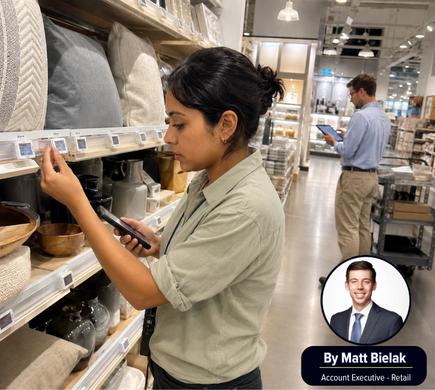
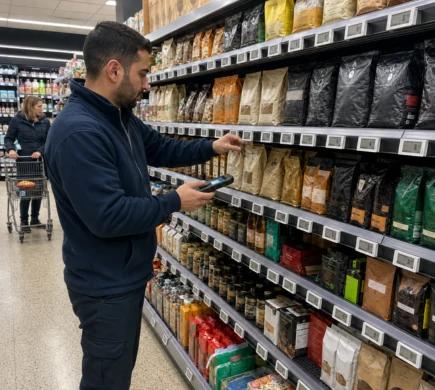
When ESLs are integrated with POS and inventory systems, the shelf becomes a signal instead of a static tag. As a result, low stock can trigger alerts. Empty facings can be flagged. Associates can use LED prompts or handheld workflows to go straight to the issue instead of scanning blindly.

The result is simple:

  • Higher on-shelf availability
  • Faster recovery
  • Fewer missed sales

Operational breakdowns drive a meaningful portion of retail shrink. Tightening shelf accuracy directly addresses that.

2. How Electronic Shelf Labels Reduce Labor Through Task Automation

If you’ve watched a team push through a major ad set or seasonal reset, you know how much time goes into printing, sorting, hanging, and rechecking paper tags. By contrast, ESLs remove that cycle.

Price changes and promos move from manual tasks to scheduled events. When tied into tasking platforms or handhelds, the shelf can guide associates with LED cues for replenishment, BOPIS pulls, planogram corrections, or clearance adjustments.

U.S. pilots regularly show 60–90% reductions in paper tag labor. In a mid-size store, that can mean 40–60 hours a week redirected into service, recovery, fulfillment, or fitting room coverage.

ESLs don’t cut labor. They cut low-value repetition. That shift, in turn, changes how a store feels during peak periods.

3. How Electronic Shelf Labels Reduce Retail Shrink Through Automated Markdowns

Shrink doesn’t usually come from one massive failure. It comes from timing misses. For example, late markdowns. Inconsistent clearance execution. Tags that don’t match the register.

ESLs allow markdowns to run on rules. Inventory age, sell-through thresholds, seasonal timelines …whatever logic you set. When the trigger hits, the price updates instantly. As a result, sell-through improves without manual intervention.

This matters most in categories that live on timing: apparel, footwear, beauty, seasonal goods, clearance zones.

Retail shrink exceeds $100 billion annually in the U.S., and a meaningful portion ties back to operational misses. Even modest improvements in markdown timing can materially improve sell-through and margin recovery.

4. Omnichannel Price Parity

Price mismatch is one of the fastest ways to lose trust. 

A customer sees one price online, another on the shelf, and something different at checkout. That creates service desk friction, refunds, and cancellations.

When ESLs sync directly with the same pricing files that feed POS and digital channels, prices move together. If a promo activates at 6 a.m., it activates everywhere at 6 a.m.

Retailers that align ESLs with POS and e-commerce often see mismatch rates drop below 0.5%.

That consistency reduces disputes, protects margin, and makes BOPIS and ship-from-store far cleaner operationally.

5. Sustainability and Store Efficiency

This one doesn’t always lead the conversation, but it adds up.

Walk into enough backrooms and you’ll see stacks of unused tags, reprints, and disposal bins. Multiply that across a fleet and the waste becomes significant.

E-ink ESLs only draw power when updating. With controlled refresh logic and long battery life, they operate efficiently for years. At the same time, they eliminate millions of printed tags annually across large networks.

For retailers under ESG pressure, this becomes measurable progress without adding complexity to store teams.

These Electronic Shelf Labels benefits compound quickly when shelves are connected directly to POS and inventory systems.

Closing Thoughts

When retailers evaluate Electronic Shelf Labels benefits, the conversation usually starts with pricing efficiency but quickly expands into labor productivity, shrink control, and omnichannel consistency.

Once shelves go digital, store execution tightens.

Pricing syncs. Labor shifts into higher-value work. Markdown timing stabilizes. Omnichannel alignment becomes predictable instead of reactive.

That said, ESLs don’t fix weak processes. Integration, governance, and pricing discipline still matter. The retailers who see strong returns treat ESLs as infrastructure, not signage.

If you’re evaluating a pilot, building a business case, or pressure-testing an existing roadmap, I’m always open to talking it through. No deck. No pitch. Just a practical conversation about what works and what doesn’t in real stores. Let’s Talk

Matthew Bielak discussing Electronic Shelf Labels benefits for retail operations

Matthew Bielak explains how Electronic Shelf Labels benefits extend beyond pricing into labor efficiency, shrink reduction, and omnichannel consistency.