Why Paper Price Tags Are Costing Grocery Chains More Than You Think
In grocery stores, Electronic Shelf Labels for grocery chains are proving their worth…eliminating the hectic manual cycle of printing, sorting, and replacing paper tags during every promo or price correction.
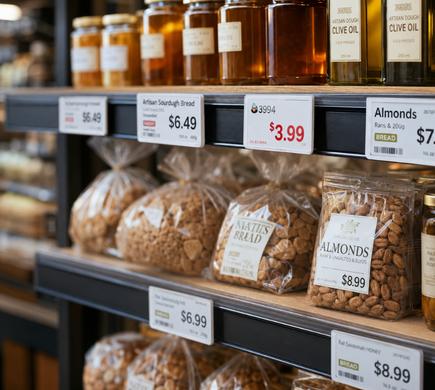
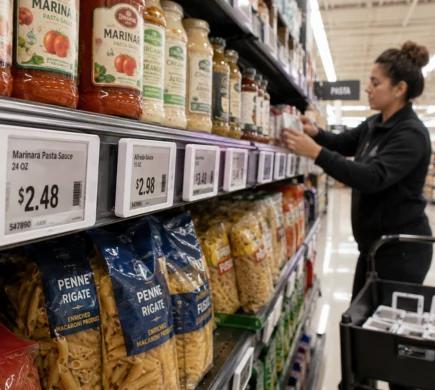
In simple terms, ESLs are small, battery-powered displays that mount on the shelf and tie directly into a store’s pricing and inventory systems. When headquarters pushes a change, it shows up on the shelf in minutes no reprinting, no walking the aisles with a scanner gun.
Once stores start running with ESLs, you can feel the change almost right away with shelf price matching the POS, and the efficiency with price updates through automation.
TL;DR (Executive Summary)
- In nearly every ESL rollout we’ve supported, the labor impact shows up first. Store teams that once spent hours printing and swapping paper tags cut that workload by 60 to 90 percent after going digital. In one grocery pilot, the change freed up almost 50 hours a week time those associates could redirect toward customers and merchandising (U.S. Chambers of Commerce).
- Grocery shrink (waste, mis-pricing, spoilage) cost U.S. retail over $100B+ annually; ESLs help stop margin erosion via faster markdowns and error correction (EY, 2022; McKinsey, “Beating the Shrink”).
- ESLs ensure price integrity across store and digital, bridging the omnichannel gap and reducing price mismatch complaints.
- In our experience, a 50-store pilot is the sweet spot for proving value without disrupting operations. Most grocers that size see the investment pay for itself within 12 to 24 months, and when scaled, returns often reach two to three times the baseline (Deloitte, 2023, Retail Dive, 2024).
- Rolling out ESLs takes more than installing hardware. It’s a phased effort. We start by tying labels into existing POS, inventory, and planogram systems, then layer in change management so store teams adopt the process smoothly and stay confident using it.
- Key evaluation criteria: battery life guarantees, network resilience, interoperability with your systems, vendor support SLAs, and modularity for future expansion.
The Business Problem in U.S. Grocery
How ESLs for Grocery Improve Price Integrity and Customer Trust
We see it in almost every grocery operation we walk into: a few cents off here, a mislabeled promo there. Paper tags never stay perfect for long. Anyone who’s managed a grocery floor knows how it goes. Thousands of SKUs, price changes flying in from corporate, two promos overlapping, and a markdown that didn’t print right. Things slip. A few small gaps here and there turn into a pattern before anyone catches it. And once shoppers notice, they don’t stay quiet about it..
Reducing Grocery Labor Constraints with ESLs
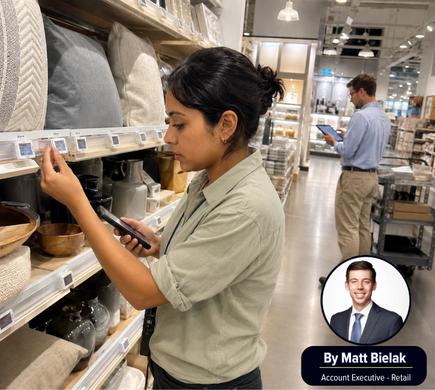
Retail labor is one of the largest operational costs. In many grocery chains, a substantial portion of weekly labor hours is devoted to updating paper shelf tags – printing, sorting, walking shelves, auditing and correcting errors.
How ESLs Help Grocery Chains Reduce Shrink and Margin Erosion
Grocery shrink includes spoilage, markdown losses, mispricing, administrative errors, and theft. In 2022 U.S. retailers lost over $100B to shrink. McKinsey identifies that breakdowns in store operations (not just theft) drive a large share of shrink (McKinsey, “Beating the Shrink”).
Solving Compliance Challenges in Grocery with ESL Systems
Planogram changes, promotional resets, and seasonal updates require tight accuracy. Manual execution often leads to misalignment, delays, and lost promotional lift.
The Technical Foundation of ESLs for Grocery Operations
Core Components
- Labels / Displays: Typically e-ink (electronic paper) technology, low power consumption because power is only required during updates, not to retain display. Some systems use LCD or segmented displays for more colors or dynamic content.
- Communication Network – Every ESL connects through a local access point or base station. Most grocers use RF or Bluetooth Low Energy (BLE); others prefer a proprietary mesh depending on their layout and interference levels. It’s the same idea as Wi-Fi, just tuned for shelf-level reliability.
- Label Management System (LMS) – This is the brain of the setup. It stores the price files, pushes updates, and keeps an eye on each label’s battery and signal strength so you can see issues before they become store problems.
- Backend Integration Layer – We connect the ESL network to your POS, ERP, inventory, and planogram systems so that pricing, promos, and product data stay aligned. It’s the bridge that keeps shelf information in sync with corporate systems.
- Power and Maintenance – Each label runs on replaceable or rechargeable batteries that typically last several years. The maintenance cycle is light, but planning it upfront saves headaches later.
- Security and Failover – We design every network with redundancy and encryption built in. If a connection drops, the label keeps its last approved price until the next update…no blank screens, no panic in the aisles.
Quantified Business Case (Benefits & Metrics)
Below is a table summarizing typical benefits and KPI ranges observed in the industry:
|
Benefit Area |
Common Range / Metrics | Notes / Drivers |
|
Labor Savings |
60–90 % reduction in tag-change labor per store |
Based on U.S. retail case studies and ROI pilots showing weekly labor savings of up to 50 hours per store. (U.S. Chambers of Commerce 2024) |
|
Pricing Accuracy |
50–80 % fewer pricing mismatches vs paper labels |
U.S. grocers testing ESL automation report significant gains in price integrity and compliance accuracy. (Progressive Grocer 2024) |
| Shrink / Waste Reduction | 5–15 % reduction in perishable waste; 20–30 % faster markdown response | McKinsey identifies markdown responsiveness as a key lever to reduce grocery shrink, which costs U.S. retailers $100 B annually. (McKinsey & Company 2023) |
| Omnichannel Consistency | <0.5 % price mismatch complaints | A U.S. study of ESL deployments found only a 0.0006 percentage-point change in temporary price deviations after adoption. (AP News 2024) |
Implementation Framework
Phase 0: Pre-Pilot Planning (4–6 weeks)
- Every successful ESL rollout we’ve done starts with setting the groundwork right.
- First, we pull the right people into the same room; Operations, IT, Finance, and Merchandising, Procurement. It’s a goal setting and benchmarking discussion where we talk through what “success” really looks like, what the numbers should prove, and how we’ll know we’re on track once stores go live.
Phase 1: Pilot Deployment (8–12 weeks)
- Install network (access points, controllers)
- Mount ESLs and integrate with LMS and pricing system
- Monitor connectivity, battery health, label errors
- Run dual price validation (paper vs ESL) for 2–4 weeks
- Collect KPI data and benchmark against controls
Phase 2: Evaluation & Iteration (4 weeks)
- Analyze performance vs targets
- Identify troubleshooting: RF issues, missing labels, data mismatches
- Refine workflows: promotional windows, exception handling, timeout strategies
Phase 3: Rollout & Scaling (12–24 weeks)
- Start the rollout where it’ll make the biggest impact. Your high-SKU, high-promo stores. Those locations feel the strain of manual updates the most, so they’ll show the ROI faster and give you cleaner data to scale from.
- Expand in geographic clusters to reuse infrastructure
- Phased label addition (e.g., fresh, center store, seasonal)
- Continuous training, QA audits, feedback loops
Change Management & Governance
- Communicate goals and benefits to store leadership
- Train store teams (tiered: leadership, tech, associates)
- Establish escalation paths (label fault, pricing disputes)
- Monitor weekly dashboards and execute corrective action
Scale Cadence & Governance
- Use a “pod” model: groups of stores supported by shared field tech
- Quarterly reviews and KPI gating for next tranche
- Continuous feedback and refinements
Vendor Selection Checklist
| Criteria | Why It Matters | Evaluation Tip |
| Integration & APIs | Must connect to POS, pricing, inventory, planogram systems. | Ask for reference integrations and sample APIs. |
| Battery Life Guarantees | Ensures multi-year operation; low replacement cost. | Request lab and field test data; consider replacement contract. |
| Network / RF Resilience |
Store layouts vary; interference can kill updates. |
Simulate RF in pilot; use tools to map dead zones. |
| Service Level Agreements (SLA) | You need uptime guarantees, label warranty, patching. | Include uptime, response times, penalty clauses. |
| TCO & Upgrade Modularity | Future use cases (pick-to-light, IoT) may be needed. | Vendor should support modular expansion. |
| Security & Data Encryption | Sensitive pricing and inventory data are critical. | Ask for encryption standards, audits, attack testing. |
| Support & Field Services | On-the-ground support is essential for rollout. | Check vendor’s local presence, deployment teams. |
| Transparency on Hidden Costs | Battery replacement, network upgrades, training. | Request full 5-year TCO model. |
| Vendor Stability & Roadmap | We always remind clients that picking an ESL partner isn’t just about the tech. It’s about who’s still standing five years from now. | Ask for roadmap and financial health. |
What To Plan For
- Battery Replacement Cycles – negotiate long-life or hybrid systems; schedule non-peak replacement windows.
- Label Durability & Tampering – choose ruggedized labels (waterproof, shock-resistant), use tamper detection.
- Signage & Regulatory Compliance – fall-back print tags in regulated areas, dual mode operation during audits.
- Scope Creep (pilot-to-scale traps) – nail pilot KPIs, gate scaling by performance metrics.
- Vendor Lock-In Risk – insist on open APIs, ability to switch label suppliers.
- Operational Disruption – run dual system period, maintain fallback integrity, rollback plan.
Outlook: The Future of ESLs
- Dynamic & Assisted Pricing: When people hear “dynamic pricing,” they often think of surge models but that’s not where grocery is headed. What we’re seeing in pilots is smarter markdown logic: prices that adjust based on demand, sell-through, and local conditions. It’s still governed, just faster and cleaner than printing new tags.
- AI and Computer Vision Integration: The next wave pairs ESLs with in-shelf cameras and sensors. When that setup works right, the shelf can flag low stock, detect a misplaced item, or trigger a restock task automatically. It’s not futuristic. It’s already happening in a few large-format stores testing vision-linked ESL networks.
- Autonomous Shelf Operations: Eventually, these labels could act more like digital co-workers than static tags. ESLs will talk to robots, handhelds, or sensors to fix planogram gaps and keep layouts compliant without someone walking every aisle. We’re not far from shelves that can self-check and report back in real time.
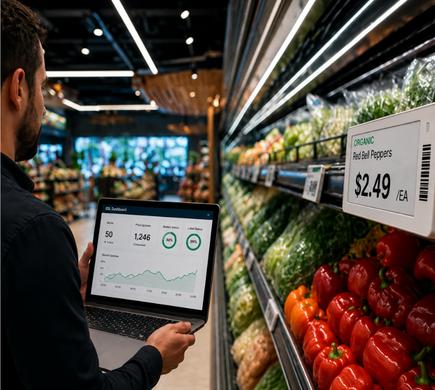
- Cross-Store Analytics & Benchmarking: Real-time dashboards to compare shelf health, labor efficiency, shrink across network.
- Sustainability & ESG Leverage: Paper, ink, tag waste reductions selling the environmental benefit to executives and investors.
Commission a pilot ROI workshop with your procurement, operations, IT, finance, and supply chain leaders.